
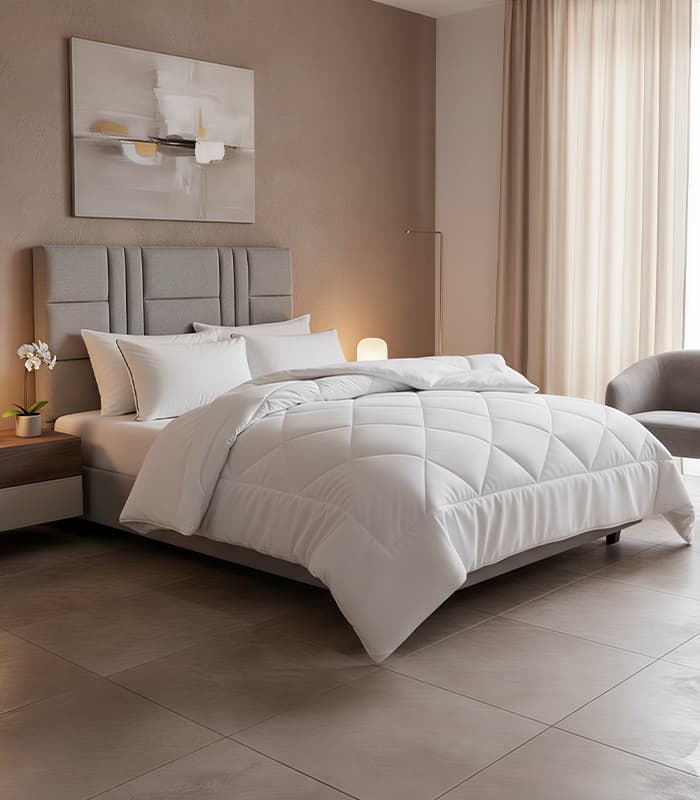
The same thing happens every year. The first genuinely cold night arrives, you pull the heavy duvet out of the wardrobe, you fall asleep warm and satisfied, and two or three hours later you wake up hot and damp and kick it off. Some time before dawn you wake again, cold, and pull it back. You were in bed for eight hours and your body rested for about half of them.
The problem usually isn't the duvet's quality, and it isn't that you "run hot". It's that the duvet is heavier than your climate and your home actually call for.
Our winter is mild, and that's exactly the problem
Most of our mental image of a duvet comes from countries with sub-zero winters and central heating running all night. Egypt is a different situation entirely. January nights in Cairo typically sit between 8 and 12°C — genuinely cold, but not severe. At the same time, almost no home here has central heating, so the bedroom stays close to the outdoor temperature.
That means you need something that keeps you comfortable against 12°C air, not against freezing air. Put a duvet built for freezing conditions over yourself in a 12°C room and your body overshoots, starts sweating to regulate its temperature, and the dampness is what wakes you.
Heavy is not the same as warm
Three things get confused with one another:
Fill weight is how much material is inside the duvet, measured in grams. It's the closest single indicator of warmth.
Total weight includes the outer fabric too. A duvet with heavy casing can feel substantial in your hands without being especially warm.
The sensation of weight is a different thing again. Some people genuinely sleep better with something heavy resting on them, and that has nothing to do with temperature. If that's what you're after, a thick winter duvet is the wrong tool — it gives you the weight and a load of unwanted heat along with it.
If the label carries a tog rating, that's a European measure of insulation: around 4.5 tog is a summer duvet, 9 to 10.5 covers most of the year, and 13.5 is a heavy winter one. Most products sold locally are rated by fill weight in grams instead. If you're reading grams, the rule is simply that a higher number means more warmth and less airflow.
Choose for where you live
Egypt doesn't have one climate, and the difference between governorates genuinely changes the answer.
Cairo, Giza and the Delta. Winter nights between 8 and 12°C, relatively dry. A mid-weight duvet — the kind that works from October through March — is the right call for most people here. A heavy winter duvet is more than the climate asks for unless you're someone who feels the cold quickly.
Alexandria and the North Coast. The numbers look similar to Cairo, but it feels quite different, because high humidity moves cold into the body faster. You can reasonably go a step heavier here, but breathability matters more than weight does. A duvet that traps moisture in a humid climate gets heavy and clammy over the night, which is worse than being slightly under-covered.
Upper Egypt, from Minya down to Aswan. Dry air and a wide gap between day and night temperatures — a mild afternoon can turn into a properly cold night. Mid-weight still works well here. For the handful of genuinely cold nights, adding a light blanket beats buying a heavy duvet you'll use five times a year.
Sinai and high ground. This is the one case where a heavy winter duvet earns its place. Saint Catherine drops below freezing, and that's a different problem from the rest of the country.
Your building matters more than your governorate
Before you choose, look at the actual room:
- Top-floor flats get significantly colder in winter because the roof is exposed to open sky — the same reason they bake in summer.
- Ground floors run colder than the middle of a building, especially over ceramic or marble.
- Old or poorly sealed windows leak cold air all night without you noticing.
- North-facing rooms stay colder than south-facing ones.
A top-floor bedroom with old windows in Tanta needs more duvet than a third-floor room in the same building.
How to tell your duvet is too warm
You don't have to guess. The signs are consistent:
- You wake up hot two or three hours after falling asleep.
- You sleep with one foot outside the covers.
- You wake with sweat at the back of your neck or along your spine.
- You throw the duvet off in the night and pull it back before dawn.
Three of those together don't mean you need a warmer duvet. They mean you need a lighter one.
One duvet for the whole year?
The option that costs least and works best for most people is a mid-weight duvet used from October through March, under a good cotton cover. The cover matters more than people expect: cotton pulls moisture away from the skin, so even when the duvet runs slightly warm, the night feels calmer.
If you'd rather set the room up properly for each season, two is the practical number — a light summer duvet and a mid-weight one for winter. A heavy winter duvet stays a specialist choice, for particular regions or for people who noticeably feel the cold.
What if you already bought a heavy one?
Don't put it in storage yet. Try this first:
- Switch to a light, breathable cotton cover. On its own this solves a good part of the overheating.
- Cool the room before bed by leaving a window open for a while. Bodies sleep better in a room that's cooler than what feels comfortable while you're awake.
- Save it for the coldest fortnight of the year and use something lighter the rest of the winter.
The right duvet isn't the heaviest one you can find. It's the one that lets you sleep through the night without adjusting anything.
You can see our duvet range in a few different weights, all made in our own factory here in Egypt.