
Most people start looking into pillows the same way: a long day ends, you lie down, and you wake up with a stiff neck or a headache that follows you into the morning. A pillow looks like padding for your head. What it actually does is hold your neck in line with the rest of your spine for seven or eight hours.
Get it wrong and your neck spends the whole night bent at an angle it wasn't built for, which is where the chronic tightness across the neck and upper back comes from. Here's how to choose by the position you sleep in and the build you have.
The rule that matters: keep the neck in line
A pillow's job isn't to raise your head off the bed. It's to fill the gap between your head, your shoulders and the mattress.
- Too high: the neck bends forward or sideways at a sharp angle, pressing on the cervical vertebrae and straining the shoulders.
- Too low: the head drops back too far, which tightens the muscles at the front of the neck and makes snoring more likely.
- Right: head and neck in a straight line parallel to the mattress — the same alignment you'd have standing up straight.
Height by sleeping position
Whatever position you spend most of the night in decides the height and firmness you need.
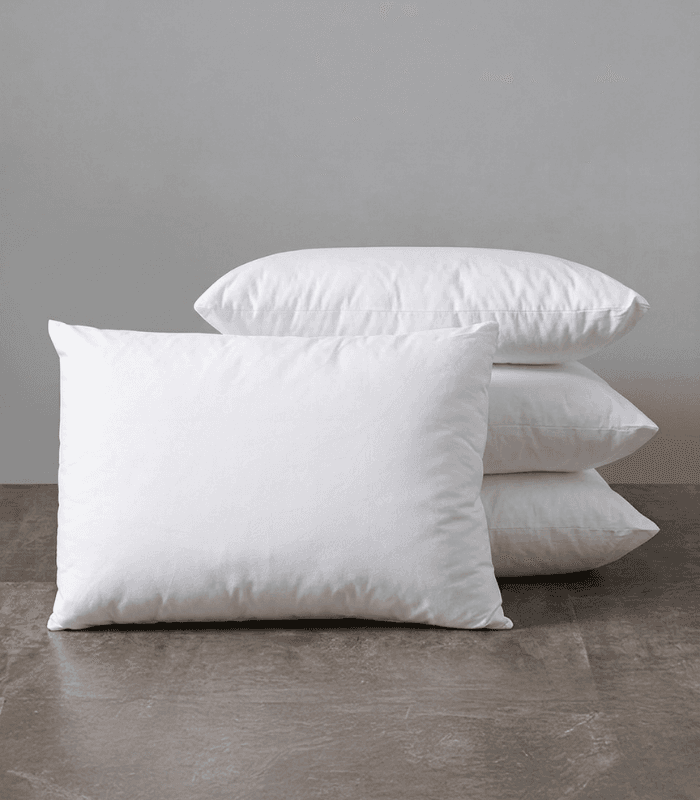
Side sleepers. The most common position, and the one needing the most support: a relatively high pillow with a medium-to-firm feel, filling the distance between your ear and the edge of your shoulder so the neck stays straight instead of dropping. The Hollow Fiber Pillow and Supreme Fiber Pillow both come in a high loft for exactly this.
Back sleepers. You want balance — enough support for the natural curve of the neck without pushing the head forward. A medium height with a gentle spring back to it.
Front sleepers. The hardest position on your neck. You want a very low or very soft pillow that lets the head sit low, so the neck isn't arched backwards all night. The Down-Like Pillow comes in a low loft.
There's a fuller breakdown by position in choose your pillow by how you sleep.
Fillings
Pillows respond differently to weight and heat depending on what's inside them.
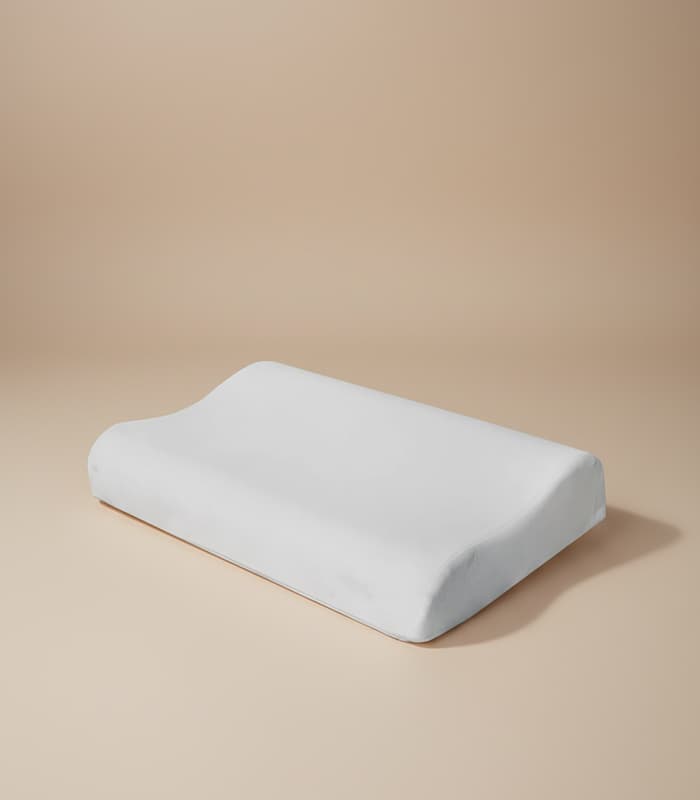
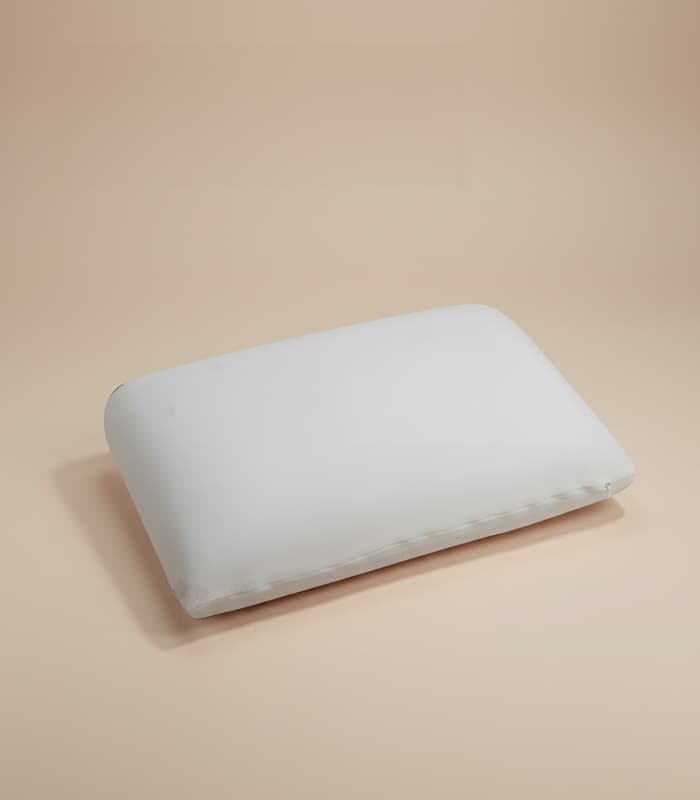
- Memory foam: responds to body heat and weight to take the shape of your head and neck, spreading the pressure evenly. The Contour Memory Foam Pillow has a raised edge that supports the neck; the Memory Foam Pillow has a flat surface.
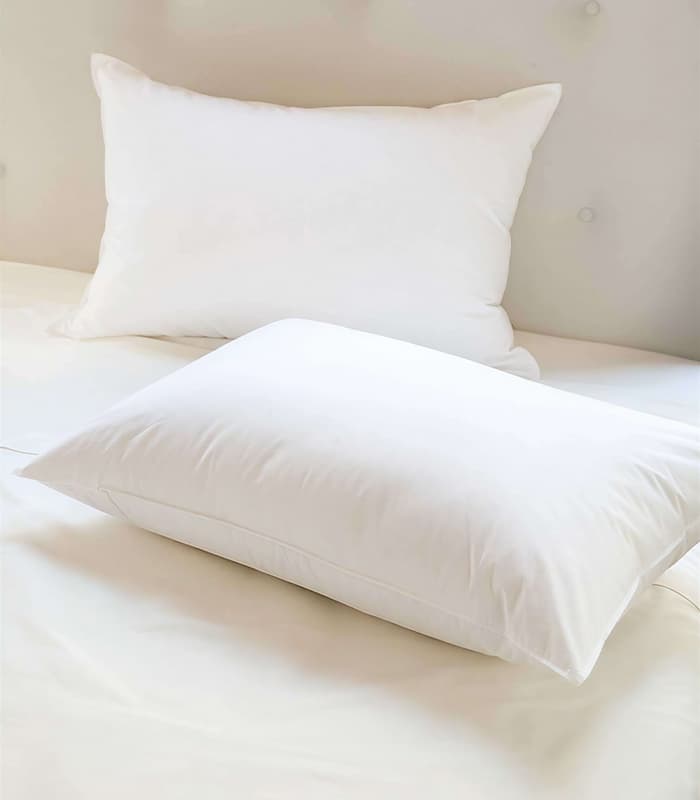
- Microfibre and fibre: springy, soft, close to the feel of down, and washable at home — like the Luxury Polysoft Pillow.
- Natural latex: made from rubber tree sap, springy and naturally ventilated so it doesn't trap heat. (We don't currently stock it.)
- Hybrids: memory foam combined with a cooling gel layer, to keep the surface cool while holding the support.
How to tell yours is finished
- The fold test: fold the pillow in half. If it doesn't spring straight back, the filling has lost its structure.
- Lumps and flatness: uneven clumps in the fill, or a pillow that's gone completely flat and offers no support.
- Waking up sore: recurring neck or shoulder pain, or a morning headache that only clears once you're up and moving.
- Age: 18 to 24 months is realistic. Sweat, natural oils and dead skin build up inside long before that.
Keeping it clean
- Use a pillow cover. It stops the filling absorbing sweat and oils and keeps dust mites down — the Pillow Cover does this.
- Air it out. Fresh air once a month helps drive out moisture.
- Wash the cover weekly in warm water.
Choosing yours
The right pillow is a small daily investment that makes a noticeable difference to how your morning starts. Match it to your sleeping position and your build, and browse Sleep Station pillows to find yours.