
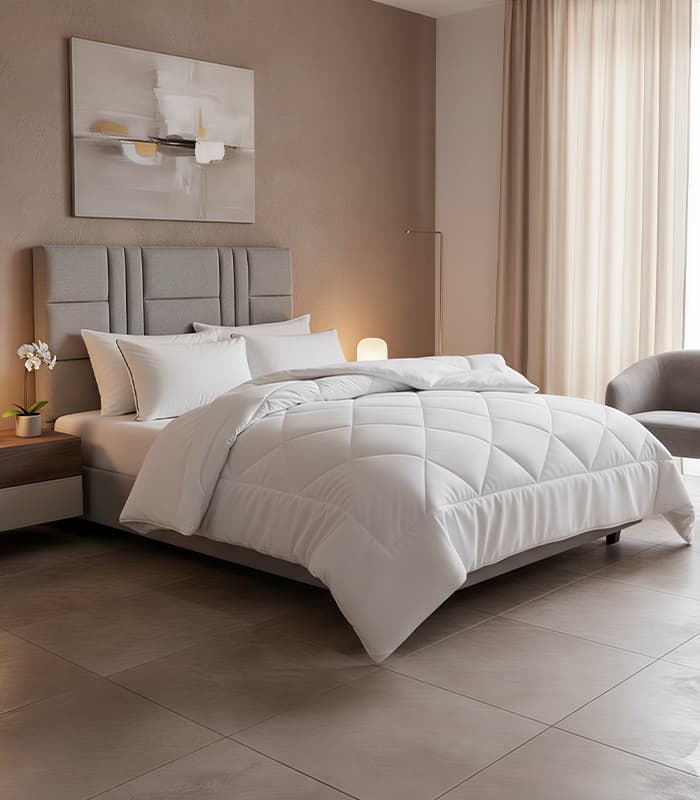
Most sleep advice is about habits: put the phone down, keep the same bedtime, go easy on the coffee. All of that helps. But the things you lie on for seven or eight hours a night get far less attention, and they shape your sleep just as much.
Here's what each part of the bed does, and how to tell when it's letting you down.
The mattress: the base for everything else
A good mattress keeps your spine in a natural line. Too soft, and your hips sink lower than your shoulders. Too firm, and your shoulders and hips take all the pressure.
Signs it's not working:
- You wake up stiff, and it eases once you've moved around
- There's a dip where you usually sleep
- You sleep noticeably better in hotels
You don't always need a new mattress. A topper adds a layer on top and changes how the bed feels for a fraction of the price. Our Medical Foam Mattress Topper fills the gaps under your back, and the Hollow Fiber Mattress Topper makes a firm mattress softer.
The pillow: keeping your neck straight
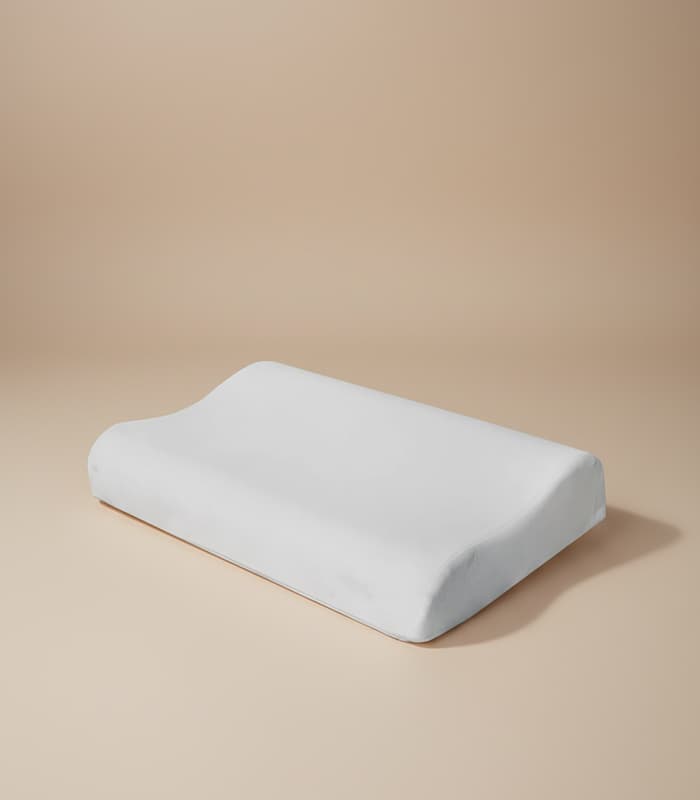
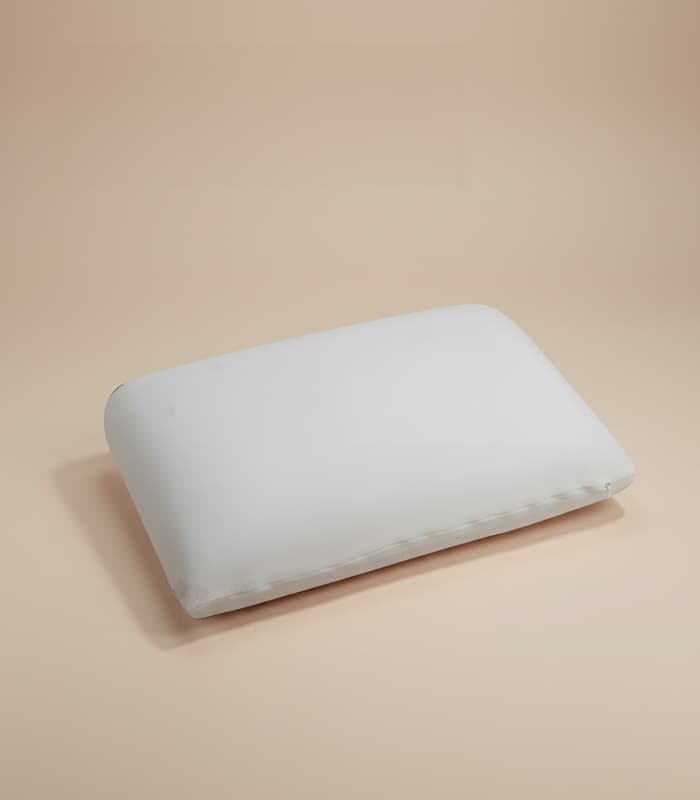
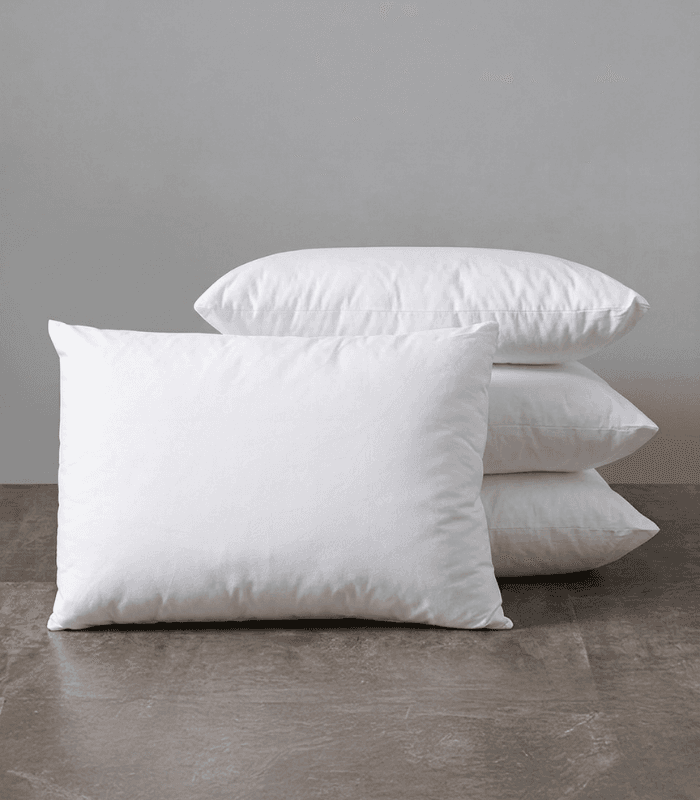
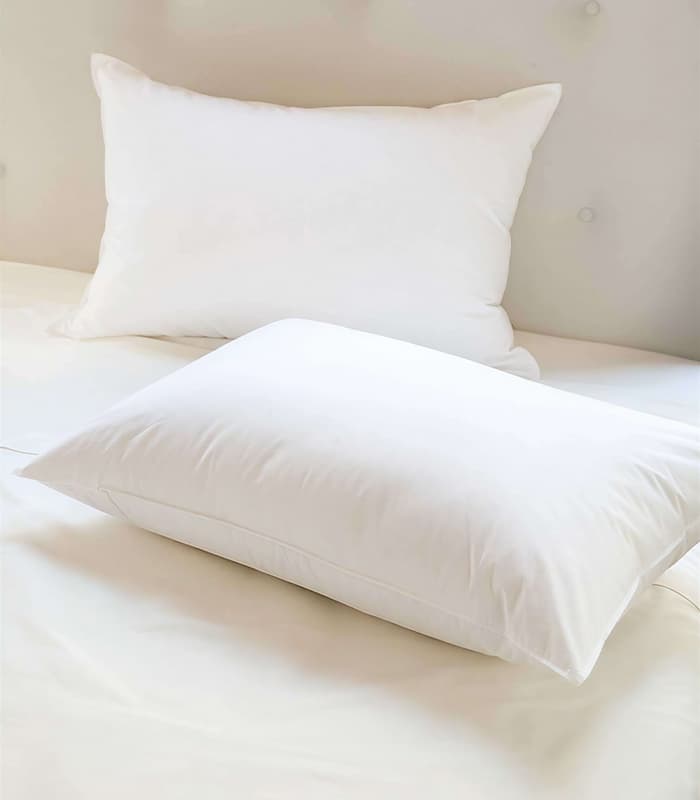
A pillow has one job: to fill the space between your head and the mattress so your neck stays in line with your back. How much space there is depends on how you sleep.
- Side sleepers need a higher pillow
- Back sleepers need a medium one
- Front sleepers need a low, soft one
If you fold your pillow in half, sleep with a hand under it, or wake with a stiff neck, the height is probably wrong. Our guide to choosing a pillow by sleeping position goes into more detail.
The duvet: staying at the right temperature
Your body cools down slightly to fall asleep and stay asleep. A duvet that's too heavy stops that from happening, which is why so many people wake up hot at 2 or 3 in the morning.
Egyptian winters are milder than most duvets are made for, and few homes here have central heating. For most bedrooms, a lighter quilt is the better choice for much of the year. Read how to choose a duvet weight for an Egyptian winter before you buy.
Sheets and covers: what touches your skin
Cotton breathes and absorbs sweat, which matters a lot in a humid Egyptian summer. A fitted sheet in the right size stays smooth all night instead of bunching up underneath you.
If your sheets keep slipping off the corners, the size is usually the problem, not the sheet. See bed sizes in Egypt, and why your sheets don't fit.
The protector: the part nobody sees
Every night a mattress takes in some sweat, and sooner or later there's a spill. A waterproof mattress protector keeps all of that out, so the mattress stays clean and lasts longer. It's easy to wash, and a mattress isn't.
A quick checklist
- Waking up stiff? Look at your mattress, or add a topper.
- Stiff neck? Check your pillow height.
- Waking up hot? Your duvet is probably too heavy.
- Sheets coming loose? Measure your mattress and check the size.
- No protector on the mattress? Add one before the next spill.
Small changes to the bed often make a bigger difference than people expect. Start with whichever sign sounds most familiar.